first time seller checklist

First Time Seller Checklist: A Guide for UAE Sellers

Nearly 70% of buyers decide whether to view a listing within seconds of seeing photos — a striking signal that preparation matters as much as price in the UAE real estate market.

This short guide defines a practical first time seller checklist for anyone ready to sell home in the Emirates. It covers pre-listing prep, pricing strategy, marketing assets, showings, negotiation, and closing coordination so the selling process feels structured rather than reactive.

Preparation—not luck—shapes outcomes. Cleaning, targeted repairs, and strong photos raise perceived value quickly. An experienced estate agent serves as a coordinator, aligning timing, paperwork, and decision points to limit surprises and keep deadlines on track.

Prioritize high-impact items that influence first impressions: light, space, curb appeal, and minor maintenance before major renovations. This approach helps protect value, reduce inspection issues, and improve the chance of serious offers when buyers view the house.

Key Takeaways

  • Plan ahead: A clear roadmap reduces surprises and speeds the process.
  • Presentation wins: Photos and staging shape buyer interest fast.
  • Agent value: An estate agent coordinates steps, deadlines, and offers.
  • Prioritize smartly: Address cleanliness, light, and curb appeal first.
  • Protect value: Good prep limits negotiation setbacks and inspection issues.

Pre-Listing Prep for UAE Sellers: Get Your Home Ready to Sell

Sensible prep work helps homeowners present the property in a way that appeals to local buyers. A compact plan reduces surprises and helps the listing reflect true value.
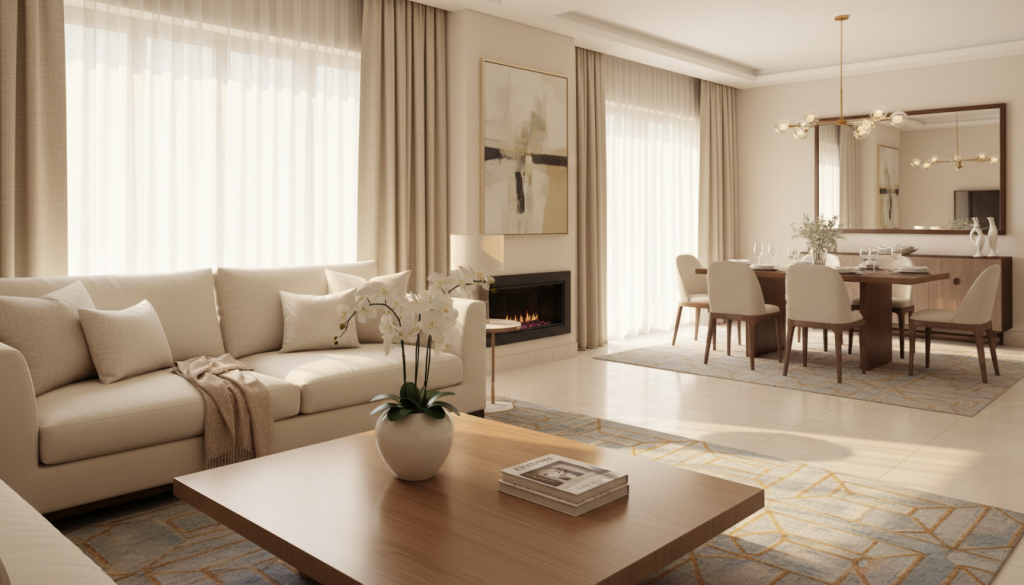
A beautifully staged living room in a modern UAE home, emphasizing a sense of readiness for selling. In the foreground, a neat coffee table adorned with a stylish vase and a few magazines, while a plush sofa is arranged invitingly. The middle ground features a clean, well-decorated room with soft lighting filtering through sheer curtains, casting a warm glow. In the background, the room opens to a tastefully decorated dining area, showcasing a polished dining table set for a casual gathering. This image captures a scene of tranquility and readiness, suggesting a welcoming atmosphere. The mood is bright and optimistic, evoking feelings of warmth and comfort, perfect for potential buyers envisioning their new home. The shot is taken from a slightly elevated angle to provide an encompassing view, with natural light highlighting the inviting decor.

Decide your timeline

Map the selling timeline to move dates, work travel, and family needs. Rushed prep often leaves cleaning or minor repairs incomplete, which buyers notice.

Deep clean and declutter

Clear counters, organize closets, and remove excess furniture to open visual space. This simple step makes features and light stand out in photos and viewings.

Depersonalize and pack

Store personal items and family photos so buyers can imagine their own life in the property. Keep only neutral decor for showings and listing images.

Repairs, paint, and fixtures

Fix leaky taps, sticky doors, and visible cracks; touch-ups reduce perceived maintenance risk. Warm neutral paint and updated fixtures deliver strong ROI without heavy renovation.

Curb appeal and inspection

Trim landscaping, clean the entry, and wash walkways to raise curb appeal—often linked to higher sale outcomes.

Consider a pre-listing inspection for older homes to avoid surprises and strengthen negotiation leverage.

Action Why it matters Quick tip
Deep clean Shows well-maintained home Focus on kitchens and closets
Minor repairs Reduces buyer concerns Fix leaks and loose handles
Neutral paint Broad buyer appeal Choose warm neutrals
Staging Improves flow and perceived space Prioritize light and furniture layout

Make sure each room is photo-ready: clean lines, consistent light, and uncluttered surfaces. These steps help the home sell faster and at better value.

First time seller checklist: Pricing, Agent Selection, and Listing Strategy

Before the listing goes live, align price, agent responsibilities, and marketing assets so potential buyers see value immediately.
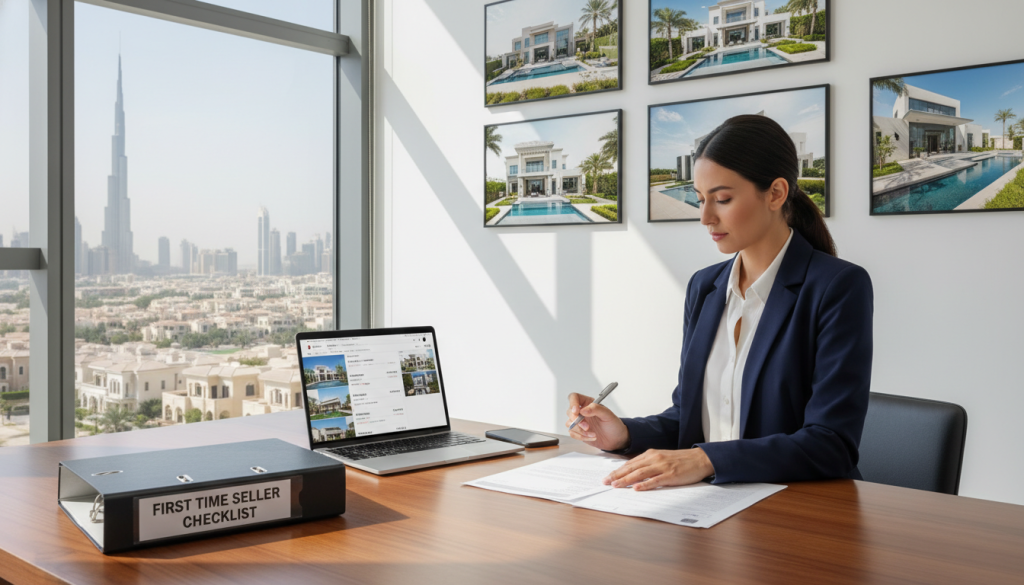
A modern workspace featuring a well-organized desk with a neatly arranged folder containing a "First Time Seller Checklist," a sleek laptop open to a listing platform, and a smartphone displaying property images. In the foreground, a professional real estate agent in smart business attire is reviewing documents, holding a pen. The middle ground showcases a wall with framed photographs of luxury properties in the UAE. The background features a large window offering a panoramic view of a vibrant city skyline under bright, natural light. The atmosphere is focused and inspirational, with a sense of professionalism and readiness to engage potential sellers. Soft shadows create depth and warmth in the workspace. The angle is slightly elevated, capturing the essence of a dedicated real estate environment.

Choose the right estate agent

Select an agent with a local track record in your building or community. Prioritize pricing discipline, negotiation skill, and a clear plan to manage the sale process end-to-end.

  • Local knowledge: Proven results in nearby units or similar developments.
  • Process plan: Vendor contacts, staging support, and communication cadence.

Set the right price

Determine price using recent comparable sales and current market trends. A realistic price reduces days on market and avoids leaving money on the table.

Listing-ready photos and visuals

Photos must show bright, consistent light and wide angles that communicate space. Include feature shots—views, upgraded fixtures, and storage—that support perceived value.

Align marketing before you go live

Agree on channels, showing rules, and how offers will be reviewed. Make sure measurements, feature lists, and spelling are accurate to keep buyer trust.

“Contact an agent early to gain time for staging, repairs, and stronger listing materials.”

Showings, Offers, and the Selling Process From Interest to Agreement

A calm, well-lit walkthrough converts curiosity into confidence and improves the odds of a strong offer.

Day-of-showing readiness

Set a comfortable temperature and open blinds to maximize natural light. Turn on lamps in darker areas and clear counters and floors with a quick tidy.

Security and pets

Remove valuables—documents, jewelry, and prescription medications—to reduce risk and distractions. Arrange pet care off-site or mask evidence: remove bowls, toys, and odors so buyers focus on the home, not animals.

Be flexible

More showing slots increase exposure and competing interest. Sellers gain negotiating strength when multiple buyers view the house within the same period.

Reviewing and negotiating offers

Evaluate an offer beyond price: financing, contingencies, inspection terms, and closing timeline matter. When inspections raise issues, respond strategically—prioritize safety, offer limited repairs, or propose credits instead of open-ended upgrades.

Make sure deadlines and contingencies are documented. This clear record keeps the selling process on schedule and protects value during the final stages of the sale.

Conclusion

A disciplined approach to presenting and pricing a house raises the odds of a smooth sale.

Treat the sale as a repeatable process: prepare the house, validate condition, set price using market evidence, launch with strong visuals, and manage showings and offers with clear criteria. This way reduces last-minute decisions and negotiation pressure.

High-impact things to prioritize are cleanliness, decluttering, neutral staging, curb appeal, and documented repairs. Early engagement with an estate agent or real estate agent helps manage timelines, inspections, and closing logistics.

Make sure the property stays showing-ready after listing. For a practical timeline and further steps, consult this seller checklist timeline at pre-listing guide. Outcomes vary by market and property, but disciplined preparation protects value and improves the chance of a smooth sale today.

FAQ

What are the top pre-listing tasks UAE sellers should complete before marketing a home?

Clean and declutter thoroughly; depersonalize by removing family photos and collections; complete visible repairs and touch-ups; apply neutral paint where needed; improve lighting and fixtures; boost curb appeal with landscaping and entrance details; and consider a pre-listing inspection to surface issues early. These steps make the property show better in photos and at open houses, and can reduce negotiation surprises.

How should a seller in the UAE determine the right asking price?

Use recent comparable sales in the neighborhood, monitor current market trends, and factor in the property’s condition, upgrades, and unique features. Consult a licensed real estate agent for a competitive market analysis—agents provide local sales data, expected days on market, and pricing strategies to help set a realistic, market-based price that attracts qualified buyers.

What should be included in listing-ready photos and visuals?

High-resolution interior and exterior photos taken in natural light; wide-angle shots to show room flow; images of key features—kitchen, bathrooms, and outdoor spaces; a clear front exterior shot for curb appeal; and a floor plan if available. Consider a virtual tour or drone shots for larger properties to increase online engagement.

How can staging improve a property’s appeal and perceived value?

Staging highlights usable space, clarifies room function, and showcases traffic flow. Use minimal, neutral furniture and strategic lighting to create a sense of scale and warmth. Remove excess items and ensure surfaces are clear; well-staged homes commonly sell faster and can command higher offers.

What logistics should sellers manage on the day of showings?

Ensure the home is spotless, well-lit, and at a comfortable temperature. Secure valuables and prescription medications; contain or remove pets; open curtains and gates to show outdoor spaces; and leave the property if possible so buyers can view comfortably. Provide your agent with all necessary access information and any showing constraints.

How do sellers evaluate offers beyond the headline price?

Review contingencies (financing, inspection, appraisal), proposed closing timelines, deposit amounts, buyer qualifications, and requests for seller credits or repairs. A lower-priced, well-qualified buyer with fewer contingencies can be stronger than a higher offer with many conditions. Consult your agent and, if needed, legal counsel before accepting.

Should UAE sellers consider a pre-listing inspection and why?

Yes— a pre-listing inspection identifies potential issues buyers may flag, giving sellers time to repair or disclose them proactively. This can speed the transaction, reduce renegotiation risk, and provide confidence to prospective buyers. Use certified inspectors familiar with local building codes and common regional issues.

What minor upgrades yield the best return on investment before listing?

Neutral paint, modern light fixtures, updated cabinet hardware, deep cleaning/grout refresh, minor bathroom or kitchen touch-ups, and improving landscaping are cost-effective. These improvements enhance perceived value and often produce a strong return by increasing buyer interest and final sale price.

How flexible should sellers be with showing times to attract offers?

Flexibility increases exposure and the chance of multiple competitive offers. Allowing evening and weekend showings, and accommodating short-notice requests, helps reach more buyers—especially expatriate professionals and investors with limited windows. Communicate constraints clearly to the listing agent to balance convenience with privacy.

What documentation should sellers prepare for the listing and sale in the UAE?

Title deeds and ownership documents, property maintenance records, service charge statements (for apartments/communities), utility bills, renovation invoices, appliance manuals and warranties, and any inspection reports. Having organized documentation speeds due diligence, supports disclosures, and reassures buyers.

How can sellers manage negotiations around inspection findings?

Assess the inspection report with the agent, obtain quotes for needed repairs, and prioritize safety or structural issues. Offer repairs, a credit toward closing costs, or a price adjustment—whichever suits the seller’s strategy. Keep negotiations factual and focused on documented costs to reach a fair resolution.

What role does curb appeal play in attracting UAE buyers, and what are quick wins?

Strong curb appeal creates a positive first impression and increases online click-through rates. Quick wins include power-washing exterior surfaces, trimming hedges, adding potted plants at the entry, fixing exterior lighting, and ensuring the front door and mailbox are clean and functioning. These low-cost actions elevate perceived care and value.

When should sellers involve a real estate agent, and how to choose one in the UAE?

Engage an agent early—preferably during pre-listing prep—to advise on pricing, staging, and market timing. Choose an agent with local expertise, verified credentials, proven sales in your community, strong marketing capabilities, and clear communication. Ask for references and a written marketing plan before signing an agreement.

Similar Posts

Leave a Reply

Your email address will not be published. Required fields are marked *